
Climate change is growing with ever-increasing frequency and tenacity, creating extreme temperatures, droughts, and floods. For people in the Middle East, such adverse weather events have been a preoccupation for centuries, as have the interconnected problems of human-caused environmental issues triggered by insatiable resource extraction.
The Epic of Gilgamesh, the 4,000-year-old Mesopotamian poem which ranks as the world’s oldest on record, asks how “we have reduced the forest to a wasteland”. 500 years later, The Curse of Akkad mythologizes the Akkadian empire’s real-world decline, with scientists today linking the demise of this ancient people to a climate-driven “megadrought” compounded by poor governance and crop mismanagement.
Declining precipitation
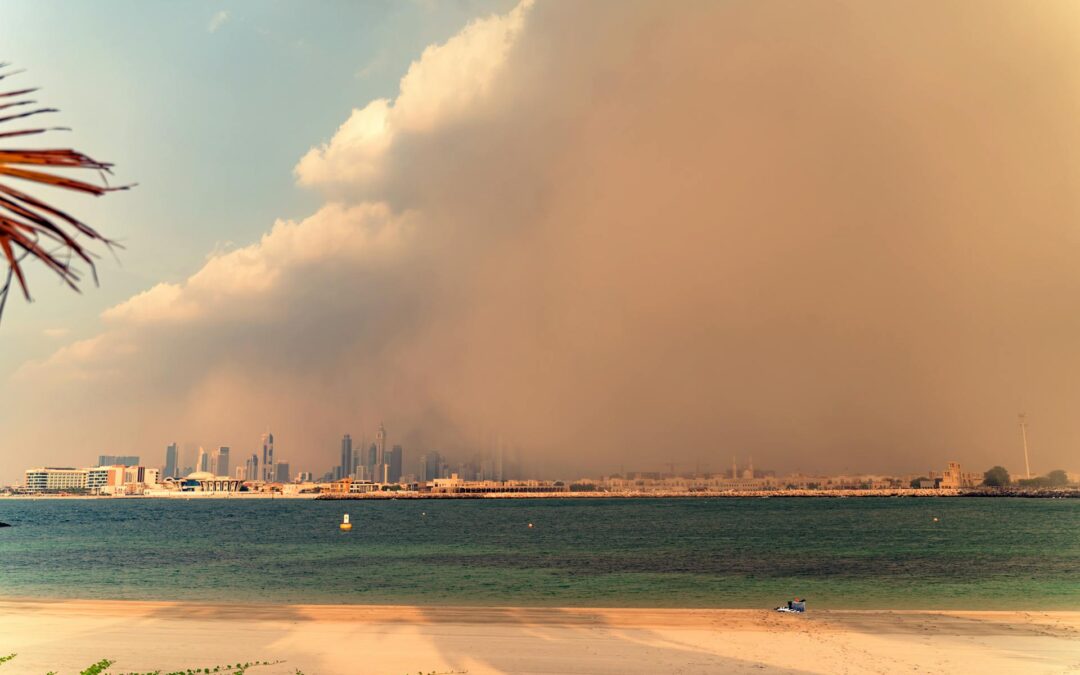
Countries across the Middle East rank among the world’s most exposed to the gravest impacts of climate change, including declining precipitation, heat waves, extended droughts, rising sea levels, and more intense sandstorms and floods. Experts point out that the impact will be felt unevenly across the region, magnifying pre-existing inequities, with resource-poor countries suffering more acutely. In contrast, richer states are better positioned to withstand climatic shocks through investment in agriculture, desalination plants, and the importation of foodstuffs. Nevertheless, the long-term resilience and sustainability of even the richest Middle Eastern states is being tested by climate change.
In countries facing long-standing crises such as rapid population growth, unemployment, high inflation rates, poverty, and widening socioeconomic gaps, climate change is exacerbating societal vulnerabilities. The weak and marginalized have been greatly affected, the World Bank warns, with its report suggesting that socioeconomically disadvantaged demographics are most at risk where governments fail to adequately tackle climate adaptation and mitigation. With dust storms alone costing the MENA region approximately $13 billion annually, Middle Eastern countries are enduring devastating climate-change-related impacts, jeopardizing water supplies and food production systems.
Global climate crisis continues to escalate
The global climate crisis continues to escalate, with record-breaking temperatures seen in 2024, a year that also saw a plethora of extreme weather events. The climate crisis is affecting all parts of the world, but particularly the Middle East and North Africa, where global warming is driving rising temperatures and worsening water scarcity. This ever-increasing problem poses a serious risk to the sustainability of livelihoods and human security. Climate-induced migration from the MENA region is on the rise, with climate change affecting the security of displaced populations, as well as the environmental sustainability of the region.
Whether voluntary or forced, migration is influenced by climate and environmental change, placing pressure not only on receiving countries, but on the migrants themselves. Displaced populations are particularly vulnerable to climate hazards. Take for example Yemen, a country with an internally displaced population of some 4.5 million people. Refugee camps have frequently been destroyed by heavy rain, storms, and flooding. Displaced communities have also faced various health issues related to environmental pollution, extreme heat, and water scarcity, with water shortages already acute in many refugee camps, in some cases triggering unrest in refugee communities.
Extraordinary architectural and engineering achievements
The MENA region is characterized by an extraordinary architectural and engineering past, its marvels ranging from wonders like the Great Pyramids of Giza to innovative projects such as Dubai’s Museum of the Future. As the climate crisis deepens, there has been a significant shift across the region towards sustainable engineering practices. Nevertheless, the harsh realities of a challenging climate and water scarcity pose considerable hurdles.
While the Middle East has abundant oil reservoirs and other natural resources, it is vulnerable to rising temperatures and declining water resources, as well as coastal threats and various other effects of global warming. Temperatures are increasing more rapidly than in other parts of the world, significantly affecting low and middle-income nations such as Iraq, Egypt, and Lebanon. In addition, the blocking of major rivers has created water scarcity downstream, endangering millions of livelihoods.
National sustainability goals
In order to mitigate these risks, several Middle Eastern nations have set ambitious national sustainability goals. Take for example Saudi Arabia, which aims to meet half of its domestic energy needs using renewable sources by 2030, and the UAE, which has set the goal of net zero emissions by 2050. Meanwhile, Qatar has pledged to reduce its net emissions by at least a quarter by 2030, and Egypt aims to transition to 42% renewable energy by 2035. The UAE and other countries are making huge strides in diversifying away from oil-dependent economies, in the process creating a new generation of environmentally conscious engineers who are committed to sustainability.
Countries such as the UAE, Jordan, and Morocco are spearheading a regional trend to develop renewable energy ecosystems to power manufacturing of goods for export. Saudi Arabia and Egypt have also made positive strides in this direction. Experts anticipate that within the next 25 years, the Middle East could establish itself as a hub for international renewable energy chains, facilitating a global transition away from fossil fuels and potentially helping to avoid the gravest threats posed by climate change, both within the Middle East and across the rest of the world.