
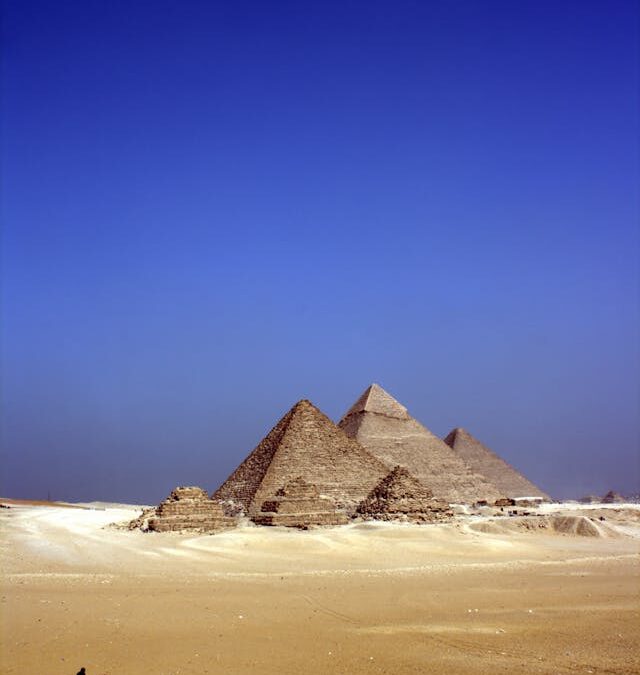
Egypt is largely a desert country. For centuries, the Nile River has been the country’s most vital resource. Covering 6,800 kilometers before emptying into the Mediterranean Sea, the Nile has provided a vital source of irrigation for millennia, transforming the arid land into an agricultural utopia. Today, the river remains a vital source of fresh water for millions of northeast Africans who rely on it for drinking water, irrigation, fishing, and hydroelectric power.
President Abdel Fattah al-Sisi pledged to transform tracts of desert into fertile farmland in order to grow crops for export. Speaking at the Future of Egypt inauguration in May 2024, he reaffirmed the government’s plans for a multibillion-dollar megaproject to transform 16,800 square kilometers of desert into fertile land by 2027. Aligning with the United Nations Sustainable Development Goals (SDG), the Future of Egypt project aims to promote sustainable agriculture and is seen many as imperative for Egypt to achieve SDGs.
Reliance on global imports
Ranking 57th out of 121 in the 2022 Global Hunger Index, Egypt continues to experience moderate levels of food insecurity. One key contributor to this is the nation’s reliance on global imports, with over half of its staples imported, making it difficult to obtain quality, affordable food.
The Future of Egypt initiative marks the first phase of the New Delta Project, a multimillion-dollar scheme currently underway in the Western Desert. The overriding objective is to provide citizens with high-quality produce at affordable prices, reducing the need for imports and boosting the economy by selling food surpluses to foreign markets. The New Delta Project will witness the creation of wastewater treatment plants and three underground reservoirs.
A boost to the economy
An array of ancillary infrastructure will also need to be built, including wells, roads, power stations, and an internal electricity network. In addition to bolstering food security in Egypt and the wider Middle East, the scheme will boost the economy by providing job opportunities. According to data from Egypt’s State Information System, 10,000 direct job opportunities have been created to date, as well as 360,000 indirect roles.
Despite the significant progress already made, Egypt continues to suffer from food insecurity issues. A report published in 2024 revealed that food insecurity levels remained largely unaltered, with the country suffering from major threats such as severe changes in weather patterns, rising global food prices, and poor-quality agricultural land. According to Trading Economics, food prices in Egypt increased by 6.90% in June 2025 compared to the same month in the previous year.
A pioneering project
In the heart of the desert, SEKEM has transformed a barren wasteland into a flourishing oasis. Centering around biodynamic farming, this pioneering project proves that ecosystems can be regenerated through sustainable agriculture, simultaneously creating a thriving, resilient economy and supporting local communities by restoring land for future generations. By applying biodynamic and organic principles, SEKEM has proven that sustainable farming can thrive even in the most challenging climactic conditions. Partnering with the Heliopolis University for Sustainable Development, SEKEM has pioneered research into sustainable food systems, providing scientific evidence of the benefits of organic farming. Its findings have increasingly influenced agricultural policies in Egypt and beyond.
The SEKEM initiative launched in 1977, when Dr Ibrahim Abouleish and his wife returned to Egypt from Austria, where he had been working in medical research. Envisioning a solution for the many social and environmental problems faced by his country, Dr. Abouleish started farming an untouched section of desert 60 kilometers northeast of Cairo. In the midst of this wilderness, he recalls standing before a well and drawing water. With these precious drops, he doused the roots of freshly planted herbs, flowers, and trees, laying the foundations for biodynamic farming in Egypt. Dr. Ibrahim Abouleish recognized the power of water to rejuvenate entire region, the cool well water attracting animals and humans alike to quench their thirst and refresh themselves.
Creating an oasis
For Dr. Abouleish, creating an oasis in a hostile environment like the desert sparked an unrelenting desire to help the world develop. He and his wife transformed the barren landscape into a sanctuary over the course of a few short years, growing enough food and medicinal herbs to begin exporting their harvest. As he pointed out, sustainable development is one of man’s most important challenges, placing an emphasis on creating conditions that will enable future generations to lead dignified lives.
Dr. Ibrahim Abouleish passed away in 2017. He left an indelible legacy, having been recognized with numerous prestigious honors, including a Right Livelihood Award, an accolade known in some circles as the Alternative Nobel Prize. He was also selected by the Schwab Foundation as an Outstanding Social Entrepreneur. His legacy lives on through SEKEM’s continued work, with the organization partnering with over 2,000 farmers. What started as a biodynamic farm has evolved considerably over the years, with the private company now producing and distributing not only food, but also cotton and herbal medicine in Egypt, North Africa, and Europe.